

Strength Training Fundamentals Every Beginner Should Know | The Fitness Vault - Hamilton Gym
Strength Training Fundamentals Every Beginner Should Know
Strength training is one of the most effective ways to build confidence, improve physical health, and make long-term progress in the gym. But getting started can feel confusing, especially if you’re new or returning to training after a break.
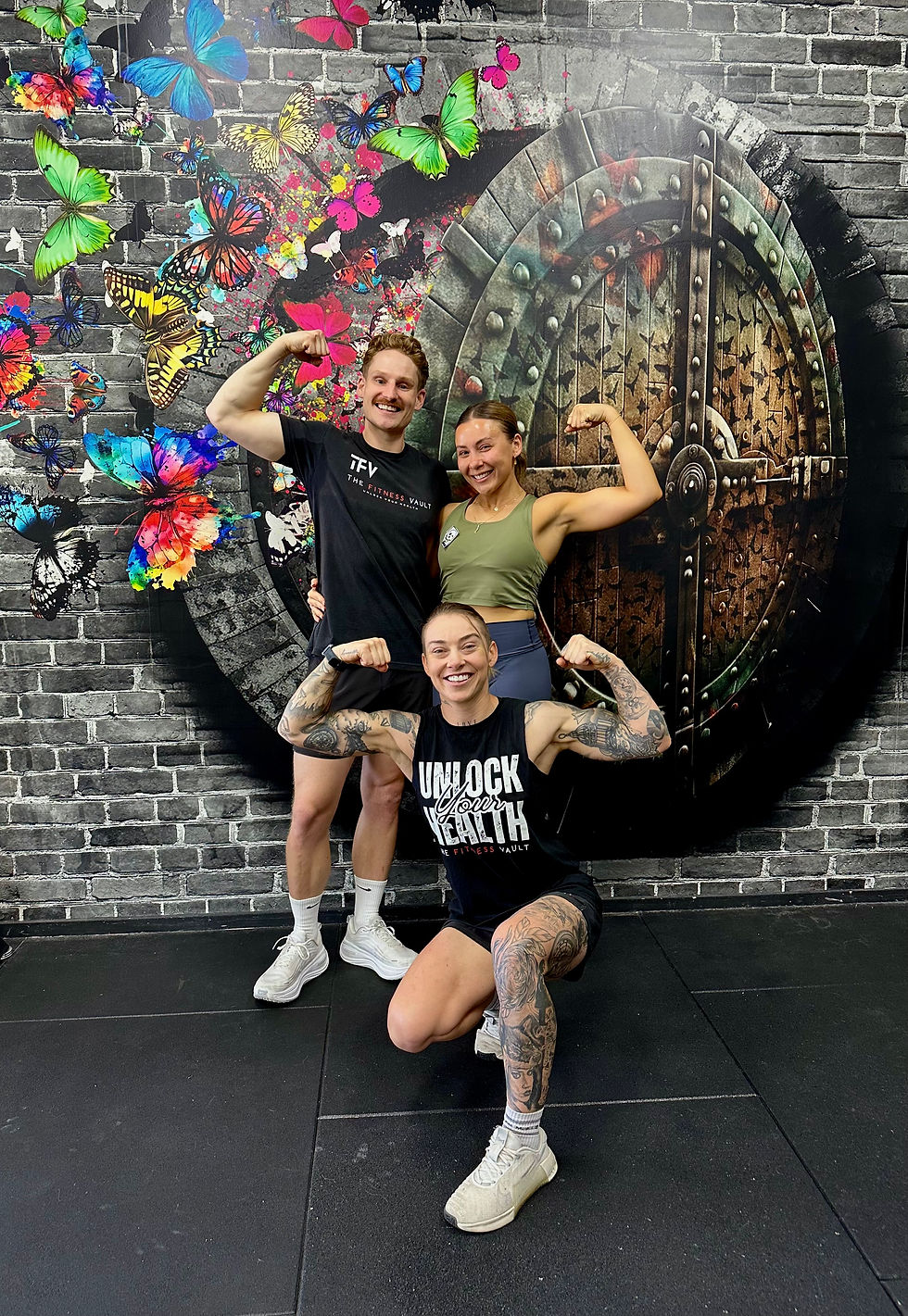
At The Fitness Vault (Hamilton gym), we consistently see beginners thrive when they understand the simple fundamentals that make strength training safe, effective, and enjoyable. These foundations help you avoid injury, stay consistent, and get results that last.
Here’s everything you need to know before you start your strength journey.
1. Master the Big Movement Patterns First

You don’t need fancy exercises. You need the basics.
Most full-body strength programs revolve around five movement patterns:
Squat
Hinge
Push
Pull
Carry
These movements strengthen your entire body and improve how you move in daily life. For beginners, learning correct technique in these patterns is the most valuable place to start.
Examples:
Squat pattern: goblet squat
Hinge pattern: deadlift or kettlebell deadlift
Push pattern: push-ups or dumbbell press
Pull pattern: dumbbell row or lat pulldown
Carry pattern: farmer carry
Start simple and build confidence. You’ll progress much faster.
2. Technique Comes Before Weight
One of the biggest mistakes beginners make is loading weight before they understand proper form. This is when injuries happen.
Instead, focus on:
Controlled tempo
Proper joint alignment
Smooth, stable movement
Full range of motion
When technique becomes second nature, strength naturally follows. At The Fitness Vault – Hamilton gym, our coaches spend time teaching the details because small adjustments make a big difference in performance.
3. Start With Weights You Can Control
A good rule of thumb for beginners is to pick a weight that allows:
8 to 12 reps
With good control
And 2 to 3 reps left “in the tank”
This is called leaving “reps in reserve,” and it helps build strength without overloading your body too soon.
As your confidence grows, gradually increase the weight. This is the foundation of progress.
4. Use Progressive Overload (The Smart Way)
Progressive overload simply means increasing the challenge over time so your body continues to adapt.
This can be done by:
Adding more weight
Adding more reps
Adding more sets
Slowing down the tempo
Improving technique
Increasing range of motion
People often think they must lift heavier every week. The truth is, progress comes from small, consistent increases, not big jumps.
5. Don’t Train to Failure Every Session
Pushing until you can’t move another rep may look impressive on social media, but it’s not smart training.
For beginners, training to failure too often leads to:
Increased injury risk
Poor movement quality
Excessive soreness
Fatigue that affects future sessions
Aim to feel challenged, not destroyed. You’ll gain strength faster when your body can recover well.
6. Prioritise Recovery as Much as Training
Strength isn’t built in the gym. It’s built through recovery.
This includes:
Sleeping 7 to 9 hours
Eating enough protein and quality carbohydrates
Hydrating consistently
Taking rest days
Managing stress
At The Fitness Vault – Hamilton gym, we treat recovery as part of the program, not an afterthought. When recovery improves, strength results skyrocket.
7. Track Your Progress Beyond the Scale
A lot of beginners rely on the scale to measure progress, but strength training offers many other wins:
You’ll lift heavier
You’ll move better
Your posture improves
Your energy increases
Strength becomes confidence
Track reps, weight used, mobility improvements, and how you feel during sessions. These indicators show progress far more accurately than the scale alone.
8. Be Patient. Strength Takes Time.
Strength training is a long-term investment. You won’t see massive changes in a week, but over months, the progress becomes undeniable.
Most beginners notice:
Better sleep within 1 or 2 weeks
Increased confidence and energy within 2 to 4 weeks
Visible strength gains by week 6
Major improvements in technique, stability, and performance around week 12
The key is consistency, not perfection.
Final Thoughts
Starting strength training doesn’t need to feel overwhelming. With the right fundamentals, you can build confidence, avoid injury, and enjoy steady progress that lasts.
At The Fitness Vault (Hamilton gym) we help beginners develop strong foundations through coaching, structure, and support. When you learn to train with skill instead of force, everything becomes easier.
If you want to build strength the smart way and feel confident in every session, visit us at The Fitness Vault, 4/63 Racecourse Road, Hamilton.
FAQs
Q: How many times per week should beginners strength train?
Most beginners do well with 2 or 3 sessions per week.
Q: Should I do cardio as well?
Yes. Cardio supports heart health and recovery. Even 20-minute walks help.
Q: How fast should I increase weight?
Increase weight only when technique feels solid and you can complete reps comfortably.
Q: Do I need special shoes or equipment?
Comfortable, flat-soled shoes are ideal. No special gear needed.
Q: Is soreness normal?
Mild soreness is normal. Extreme soreness means you may need more recovery.


Comments